
 By admin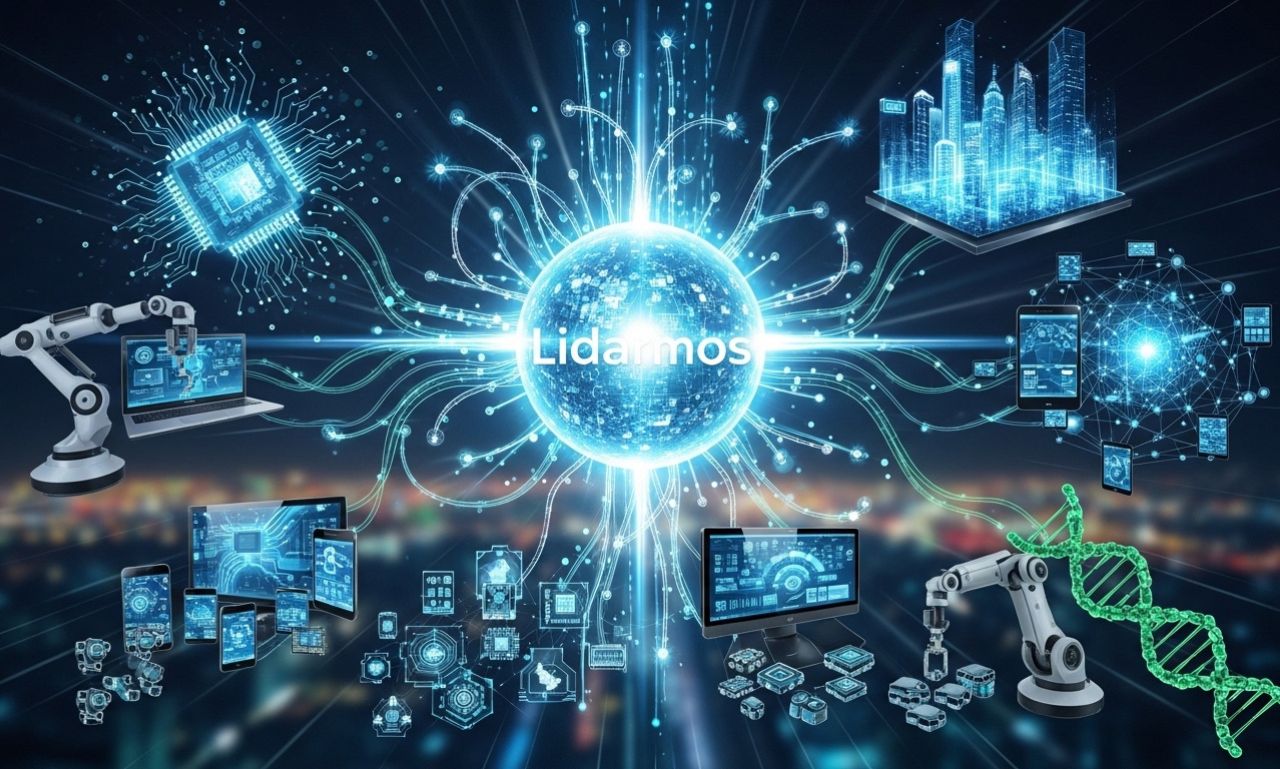
Lidarmos technology is reshaping the way we perceive and interact with our environment. From self-driving cars to high-precision mapping, its applications are vast and continually evolving. At the forefront of this revolution is Lidarmos, a company dedicated to harnessing the power of Lidar for innovative solutions across various sectors. As we dive deeper into how Lidarmos is transforming modern technology, you’ll discover not only what Lidar is but also why it matters more than ever in today’s fast-paced world. Get ready to explore a realm where light meets data, creating opportunities that were once unimaginable.
History and Evolution of Lidar
Lidar technology has its roots in the early 1960s. Initially, it was developed for military applications, relying heavily on laser-based measurement systems.
The first operational lidar system emerged from advancements in laser technology and radar principles. Researchers utilized lasers to measure distances by calculating how long it took for light pulses to return after striking an object.
In the following decades, lidars evolved significantly with improvements in both hardware and software. The introduction of solid-state lasers and compact sensors made Lidar more accessible and versatile.
By the late 1990s, commercial applications began to surface. Industries such as forestry, geology, and urban planning started incorporating Lidar data into their workflows.
Today’s lidar systems are lighter, faster, and more accurate than ever before. This evolution continues to shape various sectors while expanding possibilities across emerging fields like autonomous vehicles and smart cities.
Advantages of Lidar Technology
Lidar technology offers unparalleled precision in mapping and measurement. It uses laser pulses to create detailed 3D representations of the surrounding environment, capturing even the smallest features.
One significant advantage is its ability to penetrate dense vegetation. Traditional methods often struggle in forested areas, but Lidar can reveal ground details that might otherwise remain hidden.
Speed is another key benefit. Unlike manual surveying techniques, Lidar collects vast amounts of data quickly and efficiently. This efficiency translates into time savings for projects across various sectors.
Moreover, Lidar’s versatility stands out. From autonomous vehicles navigating complex landscapes to urban planning requiring accurate terrain modeling, it adapts seamlessly to various applications.
The accuracy of Lidar reduces errors significantly compared to other technologies. This reliability enhances decision-making processes in industries reliant on precise data analysis and visualization.
Applications of Lidarmos in Various Industries
Lidar technology is making significant strides across multiple sectors. In agriculture, it helps farmers optimize crop management by providing precise data on plant health and soil conditions. This leads to enhanced yields and reduced waste.
The construction industry also benefits tremendously from Lidar. Surveying land with this technology allows for accurate topographical mapping, ensuring projects are built on solid foundations while minimizing costly errors.
In environmental science, Lidar plays a crucial role in monitoring deforestation and habitat changes. By capturing detailed 3D representations of landscapes, researchers can track ecological shifts effectively.
Moreover, the automotive sector relies heavily on Lidar for developing autonomous vehicles. It enables real-time navigation and obstacle detection, paving the way for safer roads.
Even the entertainment industry leverages Lidar’s capabilities for creating immersive experiences in virtual reality games and films. The versatility of Lidarmos is opening new doors where precision matters most.
How Lidarmos is Revolutionizing Modern Technology
Lidarmos is at the forefront of technological innovation, harnessing the power of Lidar technology to reshape industries. By providing precise spatial data, it enhances decision-making processes across various fields.
In agriculture, Lidarmos enables farmers to optimize crop yields through detailed land mapping. The ability to monitor plant health and soil conditions in real-time transforms traditional farming methods into efficient systems.
Urban planners benefit from Lidarmos as well. Its advanced 3D modeling capabilities facilitate smarter city designs that accommodate growth while maintaining sustainability.
Moreover, this innovative approach improves safety in autonomous vehicles by offering accurate environmental sensing. As these technologies evolve, they pave the way for more reliable transportation solutions.
With its commitment to pushing boundaries, Lidarmos is not just improving existing technologies; it’s creating new paradigms where efficiency meets precision in every aspect of modern life.
Future Developments and Potential Impact of Lidarmos
The future of Lidar technology is brimming with possibilities. As advancements continue, we can expect even greater precision in data collection. This will enhance various applications across different sectors.
Developers are now focusing on miniaturization. Smaller, more efficient sensors mean that Lidar systems can be integrated into a multitude of devices—from smartphones to drones. This accessibility could democratize the use of 3D mapping and spatial analysis tools.
Moreover, artificial intelligence is playing a pivotal role in refining Lidar data interpretation. By combining AI with Lidar, industries such as agriculture and urban planning will gain deeper insights for improved decision-making processes.
Sustainability efforts also stand to benefit from these developments. Enhanced environmental monitoring through advanced Lidar capabilities may facilitate smarter resource management while minimizing ecological footprints.
These innovations signal an exciting shift toward smarter cities and safer transportation systems in the years ahead. The impact on our daily lives could be profound as this technology evolves further.
Conclusion
The emergence of Lidarmos marks a significant shift in the landscape of lidar technology. As industries continue to embrace this innovative approach, the potential for enhanced accuracy and efficiency becomes clearer. From autonomous vehicles navigating busy urban environments to precision agriculture transforming farming practices, the applications of Lidarmos are vast and varied.
As we look ahead, it’s evident that advancements in lidar technology will keep evolving. The capabilities offered by Lidarmos not only promise improvements within current sectors but also hold the key to unlocking entirely new possibilities. By bridging gaps between data collection and actionable insights, Lidarmos is set to play a pivotal role in shaping our technological future.
This journey into lidar innovation highlights the importance of staying informed about emerging technologies like Lidarmos that could very well redefine how we interact with our world. It invites us all to consider how these advancements might enhance various aspects of life—making everything from transportation safer to environmental monitoring more effective. The future looks bright as we continue exploring what lies ahead with Lidarmos at the forefront of this transformation.